

Technical error is a common failure mode for primary anterior cruciate ligament reconstruction (ACLR): a systematic literature review with meta-analysis1
Background
ACLR is a technically demanding procedure

6.5–34.0% of ACLRs fail and require revision2–5

ACLR revision is associated with the development of osteoarthritis which can negatively impact patients and healthcare systems6,7

Literature identified1
A systematic literature search was conducted to identify studies that reported the reason for failure after ACLR
Initial searches identified 5,861 articles
After screening, 39 relevant studies were included in the analysis:

Inclusion criteria
- Primary ACLR
- Clear pattern of failures
- Follow-up duration (>1 year)
- Full-text available
Exclusion criteria
- Specific populations (eg., athletes)
- Specific ligaments (eg., graft enhancement)
- Specific mode of failure (eg., immune rejection)
- ACLR in combination with other surgical procedures (eg., meniscal procedures)
- Cadaver, non-human or biomechanical studies
Systematic literature review and meta-analysis analysed:

Results
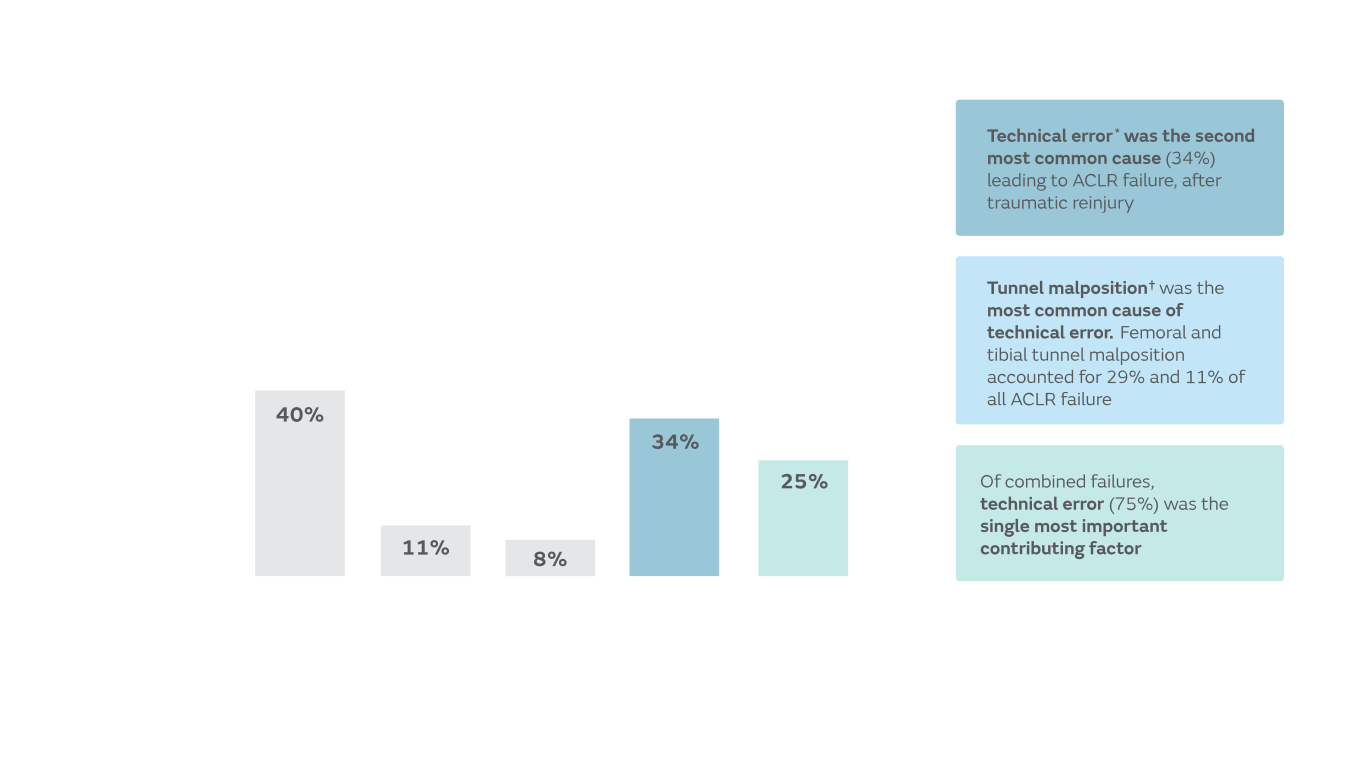
A systematic literature review with meta-analysis identified the distribution of ACLR failure modes:
Conclusion
Technical error is the second most common reason for anterior cruciate ligament reconstruction failure, after traumatic reinjury, with tunnel malposition being the most common cause of technical error. Reducing the incidence of femoral and tibial tunnel malposition, and therefore technical error, could in turn help reduce the rate of anterior cruciate ligament reconstruction revision.
Technical error, specifically tunnel malposition, in ACLR highlights an opportunity for the advancement of new technology
Click or scan the QR code to read the publication

References
- Li X, Yan L, Li D, et al. Failure modes after anterior cruciate ligament reconstruction: a systematic review and meta-analysis. Int Orthop. 2023;47(3):719–734.
- Lind M, Menhert F, Pedersen AB. Incidence and outcome after revision anterior cruciate ligament reconstruction: results from the Danish registry for knee ligament reconstructions. Am J Sports Med. 2012;40(7):1551–1557.
- Grassi A, Kim C, Muccioli GMM, Zaffagnini S, Amendola A. What is the mid-term failure rate of revision ACL reconstruction? A systematic review. Clin Orthop Relat Res. 2017;475(10):2484–2499.
- Wright RW, Gill CS, Chen L, et al. Outcome of revision anterior cruciate ligament reconstruction: a systematic review. J Bone Joint Surg Am. 2012;94(6):531–536.
- Csintalan RP, Inacio MCS, Funahashi TT, Maletis GB. Risk factors of subsequent operations after primary anterior cruciate ligament reconstruction. Am J Sports Med. 2014;42(3):619–625.
- Kievit AJ, Jonkers FJ, Barentsz JH, Blankevoort L. A cross-sectional study comparing the rates of osteoarthritis, laxity, and quality of life in primary and revision anterior cruciate ligament reconstructions. Arthroscopy. 2013;29(5):898–905.
- Grassi A, Zaffagnini S, Muccioli GMM, Di Sarsina TR, Barrientos FU, Marcacci M. Revision anterior cruciate ligament reconstruction does not prevent progression in one out of five patients of osteoarthritis: a meta-analysis of prevalence and progression of osteoarthritis. JISAKOS. 2016;1(1):16–24.